


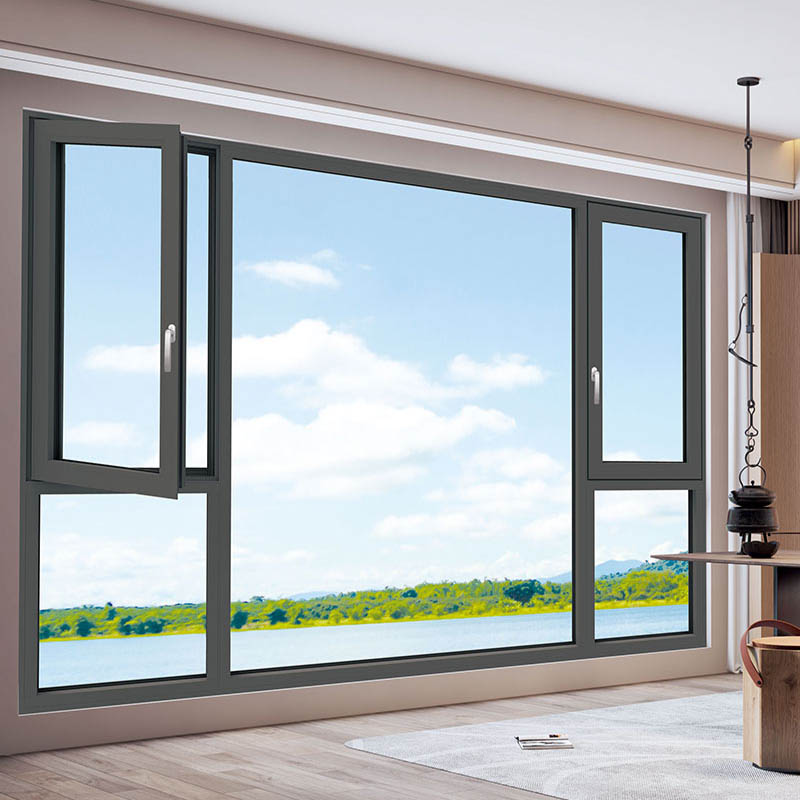


How exactly does a thermal break casement window inward opening achieve heat blocking?
Release Time : 2026-02-20
In the field of modern building energy conservation, doors and windows, as the weakest link in the building envelope's thermal structure, directly affect indoor comfort and energy consumption. Thermal break casement window inward openings, with their superior heat-blocking capabilities, have become the preferred configuration for green buildings, passive houses, and high-energy-efficiency standard residences. They not only effectively block the transfer of heat between indoors and outdoors but also significantly reduce air conditioning and heating loads in both winter and summer.
1. Thermal Break Structure: Cutting Off the Physical Barrier to Heat Conduction
"Temperature break" is the core technology of insulated aluminum alloy windows. Traditional aluminum alloy windows, due to the high thermal conductivity of the metal, allow heat to easily transfer through the profile. Thermal break aluminum windows embed a low-thermal-conductivity insulating strip in the middle of the aluminum profile, completely separating the indoor and outdoor aluminum alloys, forming a three-layer composite structure of "aluminum-insulating strip-aluminum". This design fundamentally cuts off the direct heat conduction path through the metal profile, preventing heat from rapidly transferring from the high-temperature side to the low-temperature side.
2. Thermal Insulation Strip Material: Precise Selection of PA66 Fiberglass
The material of the thermal insulation strip directly determines the thermal insulation lifespan and performance stability of the thermally broken window. PA66 thermal insulation strips possess excellent heat resistance, aging resistance, and mechanical strength, with a thermal expansion coefficient close to that of aluminum alloy, preventing deformation or cracking of the profile due to temperature changes. In contrast, inferior PVC thermal insulation strips have high thermal conductivity, are prone to aging and brittleness, and may break after 3-5 years of use, leading to thermal break failure. Therefore, genuine PA66 thermal insulation strips are a key guarantee for long-term stable thermal insulation.
3. Multi-Cavity Design: A Labyrinth Structure Extending the Heat Flow Path
High-end thermally broken aluminum profiles employ a multi-cavity structure design, typically consisting of three to six cavities. Each cavity forms an independent air layer, and air itself is an excellent thermal insulation medium. Heat must pass through the cavity walls and air layers multiple times during transfer, significantly extending the path and increasing thermal resistance. Simultaneously, the cavities can be filled with insulating foam material to further reduce heat conduction. Multi-cavity design also enhances the overall rigidity and sound insulation performance of the profile, achieving dual optimization of thermal insulation and structural strength.
4. Glass Configuration: Synergistic Thermal Insulation with Insulating Low-E Glass
Glass accounts for approximately 70%-80% of the total window area and is the primary channel for heat transfer. Thermally broken windows typically use double or triple-glazed units, with a core thickness generally ranging from 9mm to 20mm, filled with dry air or inert gas. Low-E low-emissivity coated glass reflects far-infrared heat radiation, preventing indoor heat loss in winter and blocking outdoor heat entry in summer.
5. Sealing System: The Last Line of Defense Against Air Infiltration
Heat is transferred not only through conduction but also through air infiltration. Thermally broken inward-opening windows employ a multi-seal design, typically using 2 to 3 EPDM sealing strips between the frame and sash to form a continuous, closed sealing ring. The sealing strips utilize a soft-hard co-extrusion process, balancing elasticity and durability to ensure seamless air leakage when the window is closed. The equal-pressure chamber drainage design allows rainwater to drain while maintaining a seal, preventing water accumulation and seepage.
In summary, the heat insulation of a thermal break casement window inward opening is not achieved by a single technology, but rather by the synergistic effect of five key elements: the thermal break structure, the material of the thermal insulation strip, the multi-chamber design, the glass configuration, and the sealing system. The meticulous design and quality assurance of each element collectively construct a highly efficient and energy-saving window barrier, providing modern buildings with durable and stable thermal performance.
1. Thermal Break Structure: Cutting Off the Physical Barrier to Heat Conduction
"Temperature break" is the core technology of insulated aluminum alloy windows. Traditional aluminum alloy windows, due to the high thermal conductivity of the metal, allow heat to easily transfer through the profile. Thermal break aluminum windows embed a low-thermal-conductivity insulating strip in the middle of the aluminum profile, completely separating the indoor and outdoor aluminum alloys, forming a three-layer composite structure of "aluminum-insulating strip-aluminum". This design fundamentally cuts off the direct heat conduction path through the metal profile, preventing heat from rapidly transferring from the high-temperature side to the low-temperature side.
2. Thermal Insulation Strip Material: Precise Selection of PA66 Fiberglass
The material of the thermal insulation strip directly determines the thermal insulation lifespan and performance stability of the thermally broken window. PA66 thermal insulation strips possess excellent heat resistance, aging resistance, and mechanical strength, with a thermal expansion coefficient close to that of aluminum alloy, preventing deformation or cracking of the profile due to temperature changes. In contrast, inferior PVC thermal insulation strips have high thermal conductivity, are prone to aging and brittleness, and may break after 3-5 years of use, leading to thermal break failure. Therefore, genuine PA66 thermal insulation strips are a key guarantee for long-term stable thermal insulation.
3. Multi-Cavity Design: A Labyrinth Structure Extending the Heat Flow Path
High-end thermally broken aluminum profiles employ a multi-cavity structure design, typically consisting of three to six cavities. Each cavity forms an independent air layer, and air itself is an excellent thermal insulation medium. Heat must pass through the cavity walls and air layers multiple times during transfer, significantly extending the path and increasing thermal resistance. Simultaneously, the cavities can be filled with insulating foam material to further reduce heat conduction. Multi-cavity design also enhances the overall rigidity and sound insulation performance of the profile, achieving dual optimization of thermal insulation and structural strength.
4. Glass Configuration: Synergistic Thermal Insulation with Insulating Low-E Glass
Glass accounts for approximately 70%-80% of the total window area and is the primary channel for heat transfer. Thermally broken windows typically use double or triple-glazed units, with a core thickness generally ranging from 9mm to 20mm, filled with dry air or inert gas. Low-E low-emissivity coated glass reflects far-infrared heat radiation, preventing indoor heat loss in winter and blocking outdoor heat entry in summer.
5. Sealing System: The Last Line of Defense Against Air Infiltration
Heat is transferred not only through conduction but also through air infiltration. Thermally broken inward-opening windows employ a multi-seal design, typically using 2 to 3 EPDM sealing strips between the frame and sash to form a continuous, closed sealing ring. The sealing strips utilize a soft-hard co-extrusion process, balancing elasticity and durability to ensure seamless air leakage when the window is closed. The equal-pressure chamber drainage design allows rainwater to drain while maintaining a seal, preventing water accumulation and seepage.
In summary, the heat insulation of a thermal break casement window inward opening is not achieved by a single technology, but rather by the synergistic effect of five key elements: the thermal break structure, the material of the thermal insulation strip, the multi-chamber design, the glass configuration, and the sealing system. The meticulous design and quality assurance of each element collectively construct a highly efficient and energy-saving window barrier, providing modern buildings with durable and stable thermal performance.