




Say Goodbye to Condensation and Noise! Five Hidden Benefits of Thermal Break Casement Window Inward Openings
Release Time : 2025-12-29
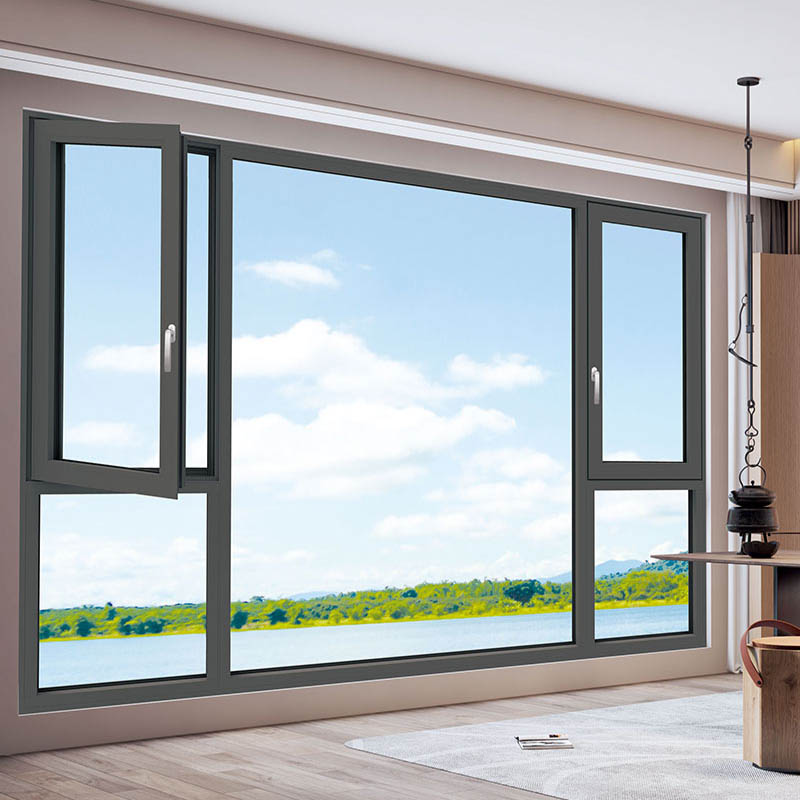
In the wave of modern residential upgrades, windows are no longer simply "light and ventilation openings," but key components concerning living comfort, energy efficiency, and even health and safety. Thermal break casement window inward openings, with their superior comprehensive performance, are becoming the preferred choice for high-end residences, passive houses, and green buildings. Not only do they have a simple and elegant appearance, but they also silently protect the temperature, tranquility, and cleanliness of the home in unseen places. This article will reveal five often overlooked yet crucial "hidden benefits."
1. Completely Eliminate Condensation: Protecting Wall Health and Indoor Air Quality
In winter, when there is a large temperature difference between indoors and outdoors, ordinary single-pane or non-thermal-break aluminum windows are prone to condensation on the inside of the glass or window frame. In severe cases, this can even lead to water runoff, causing mold on the windowsill, peeling paint, and the growth of bacteria and mites, threatening respiratory health. Thermal break casement window inward openings, however, use a "thermal break" structure—embedding a low-thermal-conductivity PA66 nylon thermal break strip in the middle of the aluminum alloy profile—effectively blocking the heat conduction path. 1. **Combined with double-glazed Low-E glass and a high-quality sealing system:** Significantly reduces the temperature drop on the inner surface, fundamentally inhibiting condensation, protecting the building structure, and improving indoor air cleanliness.
2. Superior Sound Insulation: Creating a Quiet Oasis in the City
Inward-opening casement windows naturally possess a more robust sealing advantage than sliding windows. Their sashes utilize a multi-point locking system to compress the sealing strips, forming a 360° surround seal, effectively blocking external traffic, construction, or neighborhood noise. Combined with the cavity structure design of the thermally broken aluminum profile and double-glazed laminated glass, the weighted sound insulation of the entire window can reach 35–45 dB, equivalent to reducing the 70-decibel traffic noise of a noisy street to a library-level quiet of 30 decibels indoors. This "invisible" acoustic barrier provides immeasurable value for tranquility, whether for working from home, children studying, or the elderly resting.
3. Energy Saving and Consumption Reduction: Saving thousands of yuan in air conditioning electricity costs annually.
The core of thermal break technology lies in the "thermal bridge." Traditional metal windows, due to their high thermal conductivity, become "highways" for heat loss, while thermally broken casement windows act like "insulating coats" for the windows. In summer, they block the intrusion of high outdoor temperatures; in winter, they lock in indoor heat to prevent leakage. According to building energy efficiency calculations, under the same climatic conditions, residences using high-performance thermally broken casement windows can reduce heating and cooling energy consumption by 30%–50% compared to ordinary windows. In the long run, this not only reduces carbon emissions but also directly translates into significant savings on household energy bills.
4.Safety and Convenience of Inward Opening Design: Underrated Human-Centered Details
Compared to outward-opening windows, which pose a risk of falling from heights, thermally broken casement windows open entirely from the inside, eliminating safety hazards, making them especially suitable for high-rise residences and families with children or the elderly. Furthermore, inward opening makes cleaning the outer glass easier without having to lean out of the window, making operation safer and more convenient. In addition, inward-opening windows do not occupy exterior wall space, do not affect the uniformity of the building facade, and also avoid the problem of outward-opening windows being easily damaged in strong winds and rain.
5. Durable and Low-Maintenance: One-Time Investment, Long-Term Peace of Mind
The thermal break casement window inward opening uses high-strength aerospace-grade aluminum alloy, anti-aging sealing strips, and stainless steel hardware, offering strong corrosion resistance and deformation resistance. Even in humid, salt spray, or extreme temperature environments, it maintains stable performance for decades. Compared to PVC windows that easily age and yellow, and wooden windows requiring regular painting and maintenance, thermal break aluminum windows are virtually "maintain-free," requiring only occasional wiping and lubrication of the hardware to keep them looking new for a long time.
The value of the thermal break casement window inward opening goes far beyond just "looking high-end"—it continuously improves the quality of life in an "invisible" way across five dimensions: moisture resistance, noise reduction, energy saving, safety, and durability. When condensation no longer drips, you're no longer awakened by car horns at night, and your air conditioner doesn't run all day in winter and summer, you'll truly understand: what's worth investing in is never just a window, but a healthier, quieter, and more sustainable lifestyle.
1. Completely Eliminate Condensation: Protecting Wall Health and Indoor Air Quality
In winter, when there is a large temperature difference between indoors and outdoors, ordinary single-pane or non-thermal-break aluminum windows are prone to condensation on the inside of the glass or window frame. In severe cases, this can even lead to water runoff, causing mold on the windowsill, peeling paint, and the growth of bacteria and mites, threatening respiratory health. Thermal break casement window inward openings, however, use a "thermal break" structure—embedding a low-thermal-conductivity PA66 nylon thermal break strip in the middle of the aluminum alloy profile—effectively blocking the heat conduction path. 1. **Combined with double-glazed Low-E glass and a high-quality sealing system:** Significantly reduces the temperature drop on the inner surface, fundamentally inhibiting condensation, protecting the building structure, and improving indoor air cleanliness.
2. Superior Sound Insulation: Creating a Quiet Oasis in the City
Inward-opening casement windows naturally possess a more robust sealing advantage than sliding windows. Their sashes utilize a multi-point locking system to compress the sealing strips, forming a 360° surround seal, effectively blocking external traffic, construction, or neighborhood noise. Combined with the cavity structure design of the thermally broken aluminum profile and double-glazed laminated glass, the weighted sound insulation of the entire window can reach 35–45 dB, equivalent to reducing the 70-decibel traffic noise of a noisy street to a library-level quiet of 30 decibels indoors. This "invisible" acoustic barrier provides immeasurable value for tranquility, whether for working from home, children studying, or the elderly resting.
3. Energy Saving and Consumption Reduction: Saving thousands of yuan in air conditioning electricity costs annually.
The core of thermal break technology lies in the "thermal bridge." Traditional metal windows, due to their high thermal conductivity, become "highways" for heat loss, while thermally broken casement windows act like "insulating coats" for the windows. In summer, they block the intrusion of high outdoor temperatures; in winter, they lock in indoor heat to prevent leakage. According to building energy efficiency calculations, under the same climatic conditions, residences using high-performance thermally broken casement windows can reduce heating and cooling energy consumption by 30%–50% compared to ordinary windows. In the long run, this not only reduces carbon emissions but also directly translates into significant savings on household energy bills.
4.Safety and Convenience of Inward Opening Design: Underrated Human-Centered Details
Compared to outward-opening windows, which pose a risk of falling from heights, thermally broken casement windows open entirely from the inside, eliminating safety hazards, making them especially suitable for high-rise residences and families with children or the elderly. Furthermore, inward opening makes cleaning the outer glass easier without having to lean out of the window, making operation safer and more convenient. In addition, inward-opening windows do not occupy exterior wall space, do not affect the uniformity of the building facade, and also avoid the problem of outward-opening windows being easily damaged in strong winds and rain.
5. Durable and Low-Maintenance: One-Time Investment, Long-Term Peace of Mind
The thermal break casement window inward opening uses high-strength aerospace-grade aluminum alloy, anti-aging sealing strips, and stainless steel hardware, offering strong corrosion resistance and deformation resistance. Even in humid, salt spray, or extreme temperature environments, it maintains stable performance for decades. Compared to PVC windows that easily age and yellow, and wooden windows requiring regular painting and maintenance, thermal break aluminum windows are virtually "maintain-free," requiring only occasional wiping and lubrication of the hardware to keep them looking new for a long time.
The value of the thermal break casement window inward opening goes far beyond just "looking high-end"—it continuously improves the quality of life in an "invisible" way across five dimensions: moisture resistance, noise reduction, energy saving, safety, and durability. When condensation no longer drips, you're no longer awakened by car horns at night, and your air conditioner doesn't run all day in winter and summer, you'll truly understand: what's worth investing in is never just a window, but a healthier, quieter, and more sustainable lifestyle.