


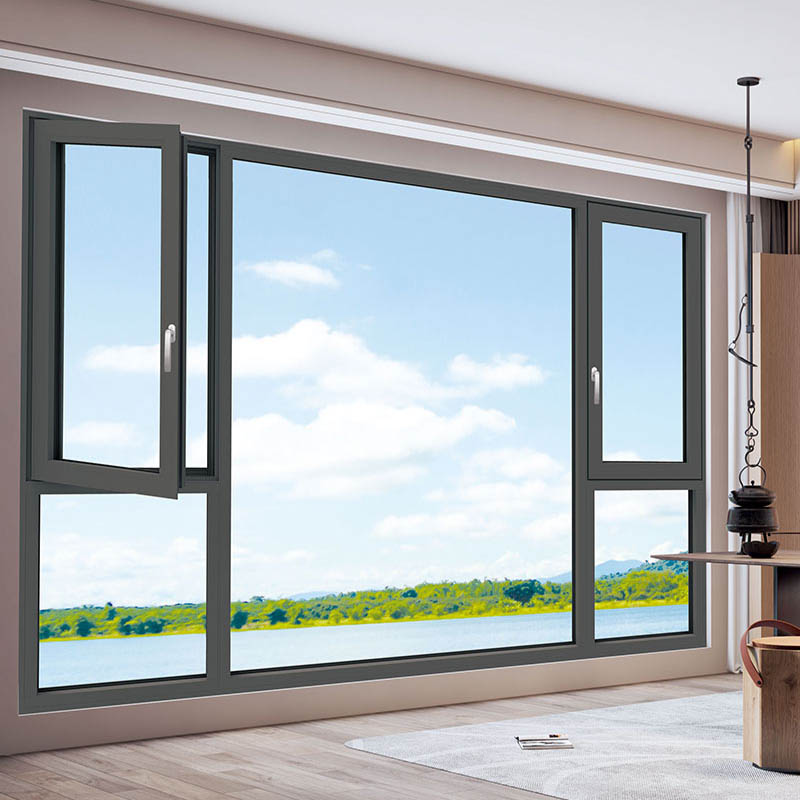


How can thermal break casement window inward opening glass configuration balance heat insulation and safety?
Release Time : 2026-03-26
The glass configuration of thermal break casement windows with inward openings needs to strike a balance between thermal insulation performance and safety. This requires comprehensive consideration of multiple aspects, including glass type selection, cavity structure design, inert gas filling, coating technology application, and installation process optimization. The core logic is to use the synergistic effect of materials and processes to block the heat transfer path and enhance structural stability, thereby simultaneously meeting thermal insulation requirements and safety standards.
The choice of glass type is fundamental to balancing thermal insulation and safety. Insulating glass, due to its sealed internal air layer, effectively blocks heat conduction, making it a common configuration for thermal break windows. Upgrading to tempered insulating glass further enhances safety—tempered glass shatters into small, blunt-angled particles, preventing sharp fragments from causing injury. For high-rise buildings or typhoon-prone areas, laminated insulating glass is a better choice; its PVB film maintains structural integrity when the glass breaks, preventing the risk of falling debris, while the air gap still provides thermal insulation.
The cavity structure design directly affects thermal insulation performance. Multi-cavity glass, by increasing the number of air layers, further extends the heat conduction path. For example, a triple-glazed, two-cavity structure adds an extra layer of glass to an insulated glass unit, creating two independent air cavities, significantly improving thermal insulation. The cavity width also needs careful design; too narrow a cavity will intensify air convection, while too wide a cavity may cause gas stratification due to gravity, both affecting thermal insulation performance. It is generally recommended that the width of each cavity be controlled between 12-20 mm to balance thermal insulation and structural stability.
Inert gas filling is a key technology for improving thermal insulation performance. Inert gases such as argon have lower thermal conductivity than air, and filling the glass cavity can significantly reduce heat convection. Compared to single-layer air filling, argon filling can reduce the heat transfer coefficient of the insulated glass, especially in cold regions, effectively reducing heat loss from the interior through the glass. It is important to note that gas filling must be completed in one step during glass assembly, ensuring a tight seal to prevent gas leakage and performance degradation.
The application of coating technology can further optimize the balance between thermal insulation and safety. Low-E coated glass, by depositing a thin film of metal oxide on the glass surface, reflects infrared heat radiation while allowing visible light to pass through. In winter, the coating reflects indoor heat back into the room, reducing heat loss; in summer, it blocks outdoor heat radiation, reducing air conditioning load. For scenarios with high safety requirements, a combination of single-silver Low-E glass and tempered glass can be chosen, ensuring heat insulation while enhancing impact resistance through tempering. If the budget allows, double-silver or triple-silver Low-E glass offers even better heat insulation, but a balance between cost and benefit must be struck.
Optimizing the installation process is the final step in ensuring the glass configuration performs effectively. The seal between the glass and window frame should use weather-resistant sealing strips, such as EPDM rubber strips, which have good elasticity and strong aging resistance, maintaining a long-term seal and preventing air infiltration that could lead to condensation or decreased heat insulation. The joint between the window frame and glass should be filled with expanding foam, enhancing structural stability and preventing thermal bridging. For large-sized glass, increasing the profile wall thickness or using a reinforced mullion design improves the window's wind pressure resistance, preventing deformation or breakage due to the glass's own weight or wind pressure.
The glass configuration for thermal break casement window inward openings requires comprehensive design of glass type, cavity structure, gas filling, coating technology, and installation process to achieve a synergistic improvement in thermal insulation and safety. This process must consider material performance, structural stability, and construction precision; any oversight in any aspect may affect the overall effect. For example, if only thermal insulation is pursued while safety is neglected, insufficient glass strength may lead to breakage; conversely, if only safety is emphasized while thermal insulation design is ignored, energy-saving requirements cannot be met. Therefore, customized design is necessary based on specific usage scenarios (such as climate conditions, building height, and safety levels) to achieve the optimal performance balance.