




Why is the thermal break casement window inward opening the ultimate answer to balancing energy efficiency and safety in aluminum alloy doors and windows?
Release Time : 2026-03-12
In the evolution of modern architectural aesthetics, windows have long transcended their basic functions of simple lighting and ventilation, evolving into a key benchmark for measuring living quality and energy efficiency. The thermal break casement window inward opening, as the pinnacle of aluminum alloy doors and windows, is redefining the interaction between people and their indoor environment with its ingenious structural design and superior material properties. This window type cleverly integrates the robust durability of industrial aluminum alloy with cutting-edge thermal insulation technology, building a solid barrier for countless families against external extremes of heat and cold, and isolating them from noise pollution, becoming an indispensable part of high-quality living.
The core secret of thermal break technology lies in its unique "thermal break bridge" structural design. Traditional aluminum alloy doors and windows, due to the extremely high thermal conductivity of the metal itself, easily become rapid channels for heat exchange between indoors and outdoors, resulting in hot air rushing in during summer and rapid heat loss during winter. The thermal break casement window inward opening incorporates a high-strength nylon thermal break strip embedded in the middle of the aluminum alloy profile, completely separating the indoor and outdoor aluminum profiles structurally. This seemingly thin thermal break strip acts as a highly efficient energy-blocking band, significantly reducing the rate of heat conduction and effectively preventing thermal bridging. Combined with double or even triple-glazed tempered glass and high-quality sealing strips, the overall thermal insulation performance of the window is dramatically improved, significantly reducing the energy consumption of air conditioning and heating equipment, truly putting the concept of green energy conservation into practice.
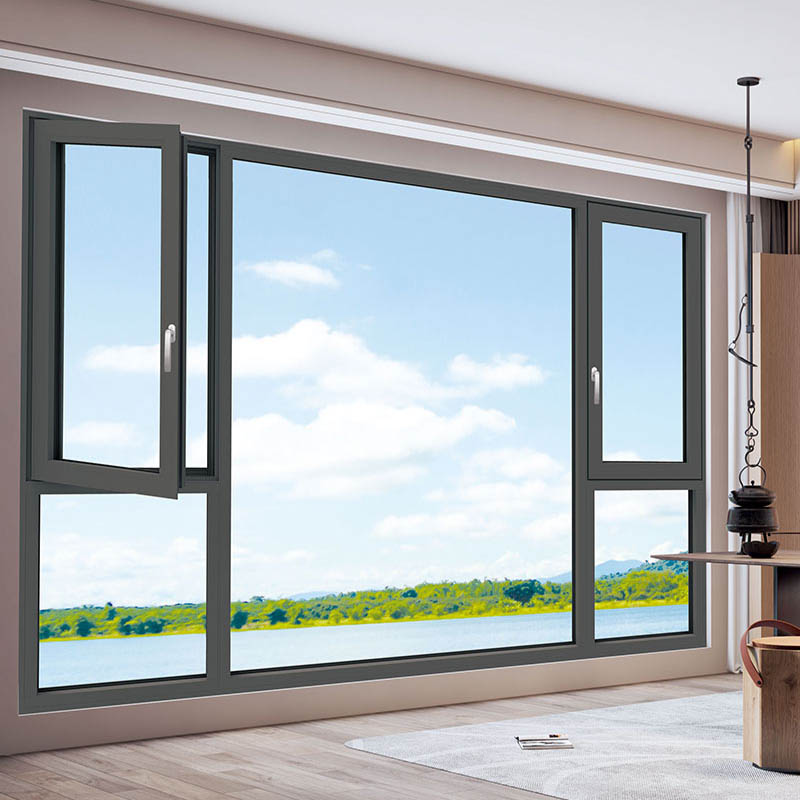
The inward opening design fully considers residential safety, ease of cleaning, and spatial adaptability. Compared to outward-opening windows, inward-opening windows open inwards, completely eliminating the safety hazard of falling objects from heights, which is especially important in high-rise residential buildings. This opening method allows residents to easily clean both sides of the glass from inside without leaning out of the window, making it both safe and efficient. Meanwhile, when closed, the inward-opening casement window's sash is tightly pressed against the frame through a multi-point locking system, forming an excellent sealing cavity. This tight seal not only further enhances airtightness and watertightness, effectively preventing rainwater leakage, but also excels in sound insulation and noise reduction, isolating the window from the noise of city traffic and creating a tranquil interior.
The aluminum alloy material gives this window unparalleled durability and aesthetic appeal. High-quality aluminum alloy profiles treated with anodizing, powder coating, or fluorocarbon paint possess strong resistance to oxidation and corrosion, maintaining their new color and never fading or deforming, even under intense sunlight or acid rain. The high strength of aluminum alloy allows for a slimmer and more refined window frame, maximizing the light-gathering area and allowing unobstructed natural light to flood the interior, creating a bright and airy visual space. Its rich color selection and surface treatment processes perfectly match various decorating styles, including modern minimalist and European classical, becoming a beautiful feature on building facades.
In actual living experience, the comfort provided by thermal break casement window inward openings is comprehensive. In the sweltering summer, it effectively blocks outdoor heat waves, keeping the interior cool and comfortable; in the frigid winter, it firmly locks in indoor warmth, preventing cold drafts. Throughout the seasons, the indoor temperature remains within the most comfortable range for the human body, reducing discomfort caused by excessive temperature differences. Its excellent sound insulation provides a quiet environment for the elderly with light sleep and children who need to concentrate on their studies. This meticulous attention to detail reflects modern home design's profound understanding of quality of life.
With increasingly stringent building energy efficiency standards and growing environmental awareness, thermal break casement window inward openings are no longer exclusive to high-end residences but are gradually becoming a preferred solution for improving the living environment for the general public. It overcomes the inherent disadvantage of metal's poor heat conduction through technological advancements and addresses many pain points of traditional window types with its user-friendly design, perfectly balancing aesthetics, practicality, energy efficiency, and safety. In the future, with the further integration of intelligent control technology and new composite materials, this type of window will undoubtedly demonstrate even greater functional potential, continuing to safeguard the warmth and tranquility of countless homes, leading a new trend in green building and smart living, and making every window a dynamic interface connecting nature and a better life.
The core secret of thermal break technology lies in its unique "thermal break bridge" structural design. Traditional aluminum alloy doors and windows, due to the extremely high thermal conductivity of the metal itself, easily become rapid channels for heat exchange between indoors and outdoors, resulting in hot air rushing in during summer and rapid heat loss during winter. The thermal break casement window inward opening incorporates a high-strength nylon thermal break strip embedded in the middle of the aluminum alloy profile, completely separating the indoor and outdoor aluminum profiles structurally. This seemingly thin thermal break strip acts as a highly efficient energy-blocking band, significantly reducing the rate of heat conduction and effectively preventing thermal bridging. Combined with double or even triple-glazed tempered glass and high-quality sealing strips, the overall thermal insulation performance of the window is dramatically improved, significantly reducing the energy consumption of air conditioning and heating equipment, truly putting the concept of green energy conservation into practice.
The inward opening design fully considers residential safety, ease of cleaning, and spatial adaptability. Compared to outward-opening windows, inward-opening windows open inwards, completely eliminating the safety hazard of falling objects from heights, which is especially important in high-rise residential buildings. This opening method allows residents to easily clean both sides of the glass from inside without leaning out of the window, making it both safe and efficient. Meanwhile, when closed, the inward-opening casement window's sash is tightly pressed against the frame through a multi-point locking system, forming an excellent sealing cavity. This tight seal not only further enhances airtightness and watertightness, effectively preventing rainwater leakage, but also excels in sound insulation and noise reduction, isolating the window from the noise of city traffic and creating a tranquil interior.
The aluminum alloy material gives this window unparalleled durability and aesthetic appeal. High-quality aluminum alloy profiles treated with anodizing, powder coating, or fluorocarbon paint possess strong resistance to oxidation and corrosion, maintaining their new color and never fading or deforming, even under intense sunlight or acid rain. The high strength of aluminum alloy allows for a slimmer and more refined window frame, maximizing the light-gathering area and allowing unobstructed natural light to flood the interior, creating a bright and airy visual space. Its rich color selection and surface treatment processes perfectly match various decorating styles, including modern minimalist and European classical, becoming a beautiful feature on building facades.
In actual living experience, the comfort provided by thermal break casement window inward openings is comprehensive. In the sweltering summer, it effectively blocks outdoor heat waves, keeping the interior cool and comfortable; in the frigid winter, it firmly locks in indoor warmth, preventing cold drafts. Throughout the seasons, the indoor temperature remains within the most comfortable range for the human body, reducing discomfort caused by excessive temperature differences. Its excellent sound insulation provides a quiet environment for the elderly with light sleep and children who need to concentrate on their studies. This meticulous attention to detail reflects modern home design's profound understanding of quality of life.
With increasingly stringent building energy efficiency standards and growing environmental awareness, thermal break casement window inward openings are no longer exclusive to high-end residences but are gradually becoming a preferred solution for improving the living environment for the general public. It overcomes the inherent disadvantage of metal's poor heat conduction through technological advancements and addresses many pain points of traditional window types with its user-friendly design, perfectly balancing aesthetics, practicality, energy efficiency, and safety. In the future, with the further integration of intelligent control technology and new composite materials, this type of window will undoubtedly demonstrate even greater functional potential, continuing to safeguard the warmth and tranquility of countless homes, leading a new trend in green building and smart living, and making every window a dynamic interface connecting nature and a better life.