


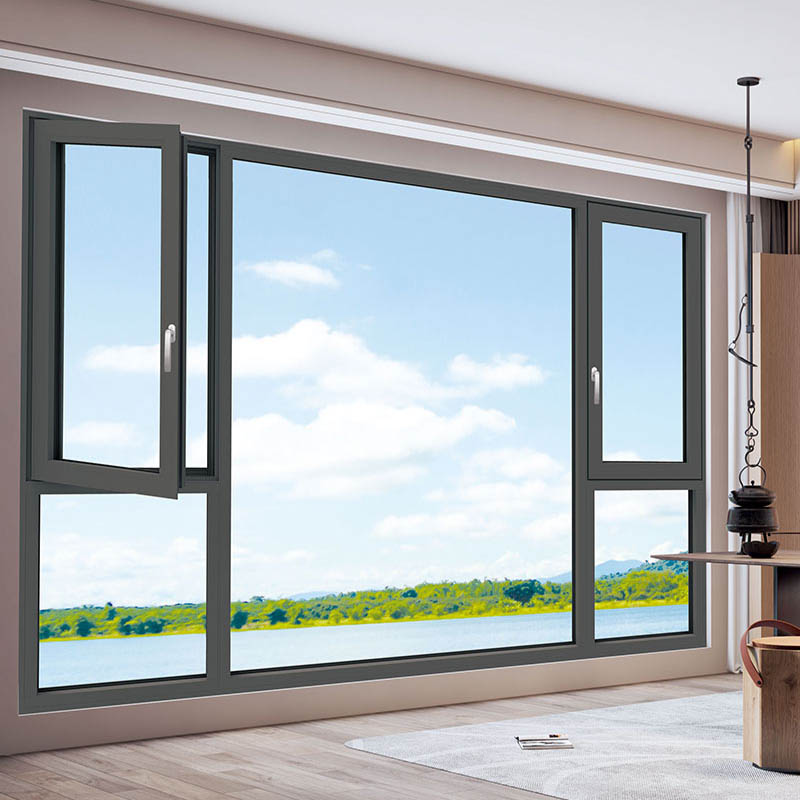


How does a thermal break casement window inward opening achieve superior insulation for a comfortable indoor environment year-round?
Release Time : 2025-12-01
In today's era of increasingly popular green buildings and energy-efficient housing, windows are no longer simply openings for light and ventilation; they have become a crucial element in the building envelope affecting energy consumption. Among these, the thermal break casement window inward opening, with its advanced structural design and materials technology, has become a core tool for achieving the ideal "warm in winter, cool in summer" living environment. Through multiple thermal barriers, a tight sealing system, and a scientifically constructed cavity, it effectively blocks heat loss from the interior during harsh winters and strongly resists the intrusion of external heat waves during hot summers, significantly reducing air conditioning and heating energy consumption, truly making the home a comfortable haven all year round.
1. "Broken Bridge" Structure: Cutting Off the Physical Barrier of Heat Conduction
Ordinary aluminum alloy windows, due to the rapid thermal conductivity of metal, are prone to forming "thermal bridges," causing a large amount of energy to be lost through the window frame. The core innovation of the thermal break casement window lies in embedding a low-thermal-conductivity thermal break strip in the middle of the aluminum profile, completely separating the aluminum alloy on both the indoor and outdoor sides, forming a "cold and heat separation" structure. This design acts like a "broken bridge" in the heat flow path, preventing heat from being directly conducted through the metal.
2. Multi-cavity + Insulating Glass: Constructing a Composite Thermal Insulation System
A broken bridge structure alone is insufficient to achieve ultimate energy efficiency. Modern thermally broken inward-opening windows employ a multi-cavity profile design, forming multiple closed air cavities internally. The low thermal conductivity of still air further blocks heat convection. Simultaneously, double or triple-glazed Low-E glass—with the air gap filled with inert gases such as argon and coated with a low-emissivity film on the inside—reflects infrared heat radiation while allowing visible light to pass through.
3. Inward-opening Casement Structure: Achieving Top-Tier Airtightness and Watertightness
Compared to the sliding gaps of sliding windows, inward-opening casement windows use a compression sealing method. When closed, the window sash and frame are evenly compressed by a multi-point locking hardware system, forming a continuous, uninterrupted seal. High-quality products can achieve an airtightness level of 8, virtually eliminating cold air infiltration and heat convection loss. Meanwhile, the hinged structure, combined with concealed drainage channels, efficiently drains rainwater while preventing backflow due to wind pressure, ensuring a dry and quiet environment even in rainy or windy weather. This high level of sealing not only enhances thermal insulation but also significantly improves sound insulation, creating a tranquil indoor environment.
4. Detailed Craftsmanship: End-to-End Optimization from Thermal Insulation Strips to Sealing Strips
Superior performance stems from meticulous attention to detail. The thermal insulation strips must be made of 25% glass fiber reinforced PA66 engineering plastic, which is heat-resistant and anti-aging, preventing deformation and failure of PVC materials during long-term use; the sealing strips are made of EPDM rubber, which has strong weather resistance and does not harden or crack from -50℃ to 120℃; the hardware undergoes anti-corrosion treatment to ensure smooth opening and closing for more than ten years. These seemingly small components together construct a stable and reliable energy-saving defense line.
The thermal break casement window inward opening achieves its "warm in winter, cool in summer" effect not through a single technology, but through a systematic integration of thermal break insulation, double-glazed Low-E glass, multi-point sealing, and precision hardware. This creates a highly efficient, durable, and intelligent energy-saving barrier for buildings. It not only reduces household energy costs but also decreases carbon emissions, contributing to sustainable development. When the wind is biting cold or the sun is scorching outside, a high-quality thermal break casement window inward opening is a silent guardian of warmth and coolness in your home, ensuring a comfortable life year-round.
1. "Broken Bridge" Structure: Cutting Off the Physical Barrier of Heat Conduction
Ordinary aluminum alloy windows, due to the rapid thermal conductivity of metal, are prone to forming "thermal bridges," causing a large amount of energy to be lost through the window frame. The core innovation of the thermal break casement window lies in embedding a low-thermal-conductivity thermal break strip in the middle of the aluminum profile, completely separating the aluminum alloy on both the indoor and outdoor sides, forming a "cold and heat separation" structure. This design acts like a "broken bridge" in the heat flow path, preventing heat from being directly conducted through the metal.
2. Multi-cavity + Insulating Glass: Constructing a Composite Thermal Insulation System
A broken bridge structure alone is insufficient to achieve ultimate energy efficiency. Modern thermally broken inward-opening windows employ a multi-cavity profile design, forming multiple closed air cavities internally. The low thermal conductivity of still air further blocks heat convection. Simultaneously, double or triple-glazed Low-E glass—with the air gap filled with inert gases such as argon and coated with a low-emissivity film on the inside—reflects infrared heat radiation while allowing visible light to pass through.
3. Inward-opening Casement Structure: Achieving Top-Tier Airtightness and Watertightness
Compared to the sliding gaps of sliding windows, inward-opening casement windows use a compression sealing method. When closed, the window sash and frame are evenly compressed by a multi-point locking hardware system, forming a continuous, uninterrupted seal. High-quality products can achieve an airtightness level of 8, virtually eliminating cold air infiltration and heat convection loss. Meanwhile, the hinged structure, combined with concealed drainage channels, efficiently drains rainwater while preventing backflow due to wind pressure, ensuring a dry and quiet environment even in rainy or windy weather. This high level of sealing not only enhances thermal insulation but also significantly improves sound insulation, creating a tranquil indoor environment.
4. Detailed Craftsmanship: End-to-End Optimization from Thermal Insulation Strips to Sealing Strips
Superior performance stems from meticulous attention to detail. The thermal insulation strips must be made of 25% glass fiber reinforced PA66 engineering plastic, which is heat-resistant and anti-aging, preventing deformation and failure of PVC materials during long-term use; the sealing strips are made of EPDM rubber, which has strong weather resistance and does not harden or crack from -50℃ to 120℃; the hardware undergoes anti-corrosion treatment to ensure smooth opening and closing for more than ten years. These seemingly small components together construct a stable and reliable energy-saving defense line.
The thermal break casement window inward opening achieves its "warm in winter, cool in summer" effect not through a single technology, but through a systematic integration of thermal break insulation, double-glazed Low-E glass, multi-point sealing, and precision hardware. This creates a highly efficient, durable, and intelligent energy-saving barrier for buildings. It not only reduces household energy costs but also decreases carbon emissions, contributing to sustainable development. When the wind is biting cold or the sun is scorching outside, a high-quality thermal break casement window inward opening is a silent guardian of warmth and coolness in your home, ensuring a comfortable life year-round.